









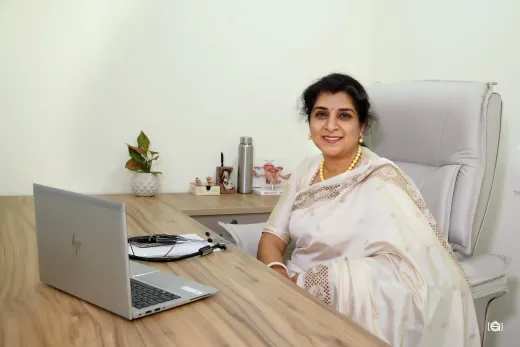
By Dr. Shweta Agarwal, MBBS, DGO Medically reviewed by Dr. Shweta Agarwal, MBBS, DGO · July 2026
Information on this page is educational and does not replace a medical consultation or official scheme guidance. Scheme rules and hospital tariffs are set by the government and revised without notice; verify current terms with the institution or scheme office in writing before making any financial decision. All government documents cited here were checked on 27 July 2026 and are linked at the end of this page.
Aansh Hospital & IVF Center is a government-registered Level-2 ART clinic in Chandrapur (registration details), serving families across Vidarbha.
Search "free IVF treatment in India" and you will find page after page listing eight or ten states with generous-sounding "government IVF schemes," complete with cycle counts and income limits. Very few of those pages link to a single government document, and at least one common claim is complicated by the state's own published records.
This page works differently. Every claim below carries an office memorandum number, a circular date, or a government page you can open yourself. Where we could not verify something, we say so plainly rather than filling the gap with a number.
IVF cost in government hospital: what is actually published
| Route | Free? | What the official document says | Verify at |
|---|---|---|---|
| AIIMS New Delhi ART Centre | No — subsidised | Package charges: IVF ₹60,000; IVF-ICSI ₹65,000; IUI ₹4,000/cycle; embryo freezing ₹5,000/year; FET ₹5,000/cycle. Page last updated December 2014 | aiims.edu ART pages |
| AIIMS Nagpur ART Centre | No — subsidised | Tariff lists "IVF – hospital charges" ₹2,500; "IVF-ET" and "IVF-ICSI-ET" ₹3,000 each; cryofreezing/thawing ₹3,000. These are hospital charges only | aiimsnagpur.edu.in rate list |
| Ayushman Bharat PM-JAY | Not covered | Exclusions annexure names "any assisted reproductive techniques, or infertility related procedures, unless featuring in the National Health Benefit Package list" | pmjay.gov.in |
| CGHS | Partial reimbursement | Up to 3 fresh cycles, ceiling ₹65,000/cycle as published in the 2011 OM, prior permission mandatory, strict eligibility | CGHS Wellness Centre |
| ECHS (ex-servicemen) | Partial reimbursement | Same structure as CGHS, sanctioned by a Board of Officers chaired by MD ECHS | echs.gov.in |
| ESIC | Service at specific centres | IVF centre established for Insured Persons at ESIC PGIMSR Basaidarapur, Delhi; availability elsewhere is centre-specific | Your ESIC hospital |
| RGHS (Rajasthan) | Documents conflict | Non-payable list excludes infertility/assisted conception; the January 2025 package master separately lists IUI and ICSI rates | rghs.rajasthan.gov.in |
| MJPJAY (Maharashtra) | Not found in package list | Structured around tertiary hospitalisation packages; we did not find IVF or ART in the current published revision | jeevandayee.gov.in |
| Private insurance / employer policy | Usually excluded | Most standard Indian health policies and maternity riders exclude infertility treatment; a few higher-tier products offer limited ART add-ons | Your policy's exclusions clause |
Note what that table does not contain: any state scheme that pays for a complete IVF cycle for the general public. We looked for one and did not find it.
What does "free IVF" actually mean?
There are three different things people mean by "free," and mixing them up is where most confusion starts:
- A universal entitlement — the state pays for IVF for anyone who qualifies medically. This does not exist in India. It exists in the UK, which is why so many "how many rounds of IVF are free" search results are British.
- A subsidised government ART centre — a public hospital runs its own IVF lab and charges far less than a private clinic, but not nothing. This exists, at a limited number of institutions.
- Beneficiary scheme reimbursement — you pay first, then claim part of it back under CGHS or ECHS rules, only if you meet every written condition and obtained permission in advance.
Most people searching for "free IVF" are hoping for (1) and will realistically be dealing with (2) or (3).
Does Ayushman Bharat cover IVF? — क्या आयुष्मान कार्ड से IVF होता है? (ivf treatment me ayushman card chalta hai kya)
No. The Ayushman Bharat PM-JAY Health Benefit Package document published by the National Health Authority contains an annexure of exclusions. One listed exclusion reads: "Any assisted reproductive techniques, or infertility related procedures, unless featuring in the National Health Benefit Package list."
IVF is not currently in that package list, so an Ayushman card does not pay for a cycle. The conditional wording means the position could change if a procedure were added, which is why you should check the current package on the official PM-JAY portal rather than treating any article, including this one, as permanent.
This is not a decision taken by any single hospital or state — the exclusion sits in the national benefit package, so it applies identically wherever you present the card.
What Ayushman Bharat does cover
PM-JAY covers hospitalisation for a defined package of secondary and tertiary care conditions — surgeries, cancer treatment, cardiac procedures and other conditions requiring inpatient admission — up to ₹5 lakh per family per year, at empanelled public and private hospitals, with each covered procedure tied to a specific package code and rate.
That structure is the reason ART falls outside it, rather than any judgement about how much infertility care matters. PM-JAY was built to protect low-income families from catastrophic hospitalisation costs for major illness and emergencies. Planned fertility treatment, delivered mostly through outpatient visits and day-care procedures spread over several weeks, does not fit that design. For the conditions it does cover, the scheme is a genuinely valuable safety net — it is simply not a fertility benefit.
CGHS IVF guidelines: what central government employees can claim
This is the one documented national IVF provision in India — and it is far more restrictive than the internet suggests.
The rules come from Office Memorandum No. Z.15025/5/2011-CGHS III/CGHS (P), dated 22 November 2011, issued by the Ministry of Health & Family Welfare and still served on the CGHS circulars portal. It applies to CGHS beneficiaries and to beneficiaries under the Central Services (Medical Attendance) Rules, 1944, and was framed on the recommendations of a technical committee of Heads of Department of Obstetrics & Gynaecology of government medical institutions.
| Condition in the 2011 CGHS OM | What it means for you |
|---|---|
| IVF only on the advice of the HOD of Obs & Gyn of a Government medical institution | This is the clinical recommendation. A private clinic's advice alone is not enough, even if treatment is later done privately |
| Permission granted by the Head of Department in your Ministry/Department | A separate administrative approval, not a hospital one |
| Procedure normally in a Government medical institution; in a private institution only case-to-case, and only if it is registered with the State/Central Government | Registration status is checked |
| Clear evidence of failure of conventional treatment | IVF cannot be the first step |
| Woman's age between 21 and 39 years | Outside that band, no reimbursement |
| Woman must be married and living with her husband | As written in the 2011 OM |
| Allowed only where the couple has no living issue | Secondary infertility with a living child is excluded |
| Maximum 3 fresh cycles | Frozen transfers are not separately provided for in the OM |
| Ceiling ₹65,000 per cycle or actual cost, whichever is lower — inclusive of drugs, disposables and monitoring | A reimbursement cap published in 2011, not a price |
| Prior approval is mandatory — IVF is a planned procedure | Claims without prior permission are not considered |
| One-time permission covering three cycles in total, with a written undertaking against any repeat claim | A lifetime limit, not a per-year one |
Two honest caveats. First, the ₹65,000 figure is the ceiling as published in 2011; at 2026 prices it is a partial reimbursement, not "free IVF," and we cannot confirm from published sources whether it has since been revised. Second, figures in circulating government documents do not perfectly agree — the ECHS policy letter that adopts the same ceiling states "₹65,000" in figures but "Rupees fifty five thousand" in words. Before planning around any number, get the current ceiling confirmed in writing by your CGHS Wellness Centre or your department's administrative section.
Is IVF covered for ex-servicemen under ECHS?
Yes, on essentially the same terms. Central Organisation ECHS letter B/49770/AG/ECHS/IVF/Policy/2023, dated March 2023 — which states that it supersedes the 2006 ECHS letter on the subject — sets out the management of infertility under ECHS. Infertility is normally investigated and treated in service hospitals; IVF and embryo transfer may be done at an AFMS hospital, government hospital, empanelled hospital, or a private institution registered with the State/Central Government, sanctioned case-to-case by a Board of Officers chaired by the Managing Director, ECHS.
The criteria in that letter mirror the CGHS OM: married and living with husband; primary infertility of at least three years' duration, or secondary infertility with no living issue; woman aged 21 to 39, with additional screening specified where the wife is above 35; clear indication of failure of conventional treatment; maximum three fresh cycles; the ₹65,000 per-cycle ceiling; prior approval; and an undertaking against repeat claims. It also lists the reports required — semen analysis and semen culture for the male partner, and hormone assays, hysterosalpingography and pelvic ultrasound for the female partner — and states that no travelling allowance is payable for referral travel.
Does ESIC cover IVF for insured persons?
ESIC runs fertility services, but this is provision at specific institutions rather than a nationwide reimbursement entitlement, and the distinction matters.
A Press Information Bureau release from the Ministry of Labour & Employment dated 29 November 2019 records the inauguration of an IVF & Fertility Centre at ESIC PGIMSR & Hospital, Basaidarapur, New Delhi — described as the first ESIC institute to provide IVF services to its beneficiaries in the Delhi-NCR region, following ICMR guidelines, for Insured Persons. ESIC has also floated expressions of interest for IVF tie-ups at other centres.
What you will not find is any published ESIC circular promising unconditional free IVF to every insured person everywhere, despite that claim appearing widely online. Whether IVF is available to you depends on your particular ESIC hospital, its current arrangements, and its referral process. Ask your ESIC branch office and the medical superintendent of your ESIC hospital directly, in writing.
क्या RGHS में IVF cover होता है? (kya rghs me ivf treatment hota hai)
Here the Rajasthan Government Health Scheme's own documents pull in two directions, and you should know both before you assume either.
The RGHS "List of Expenses Generally excluded in RGHS Hospitalization" includes "infertility/ subfertility/ assisted conception procedure — not payable." But the RGHS Package Code Master as on 07.01.2025 separately lists code 681, Intra Uterine Insemination, at ₹1,058 / ₹920 and code 682, Intracytoplasmic sperm injection (ICSI), at ₹13,225 / ₹11,500 (NABH / non-NABH rates).
Two things follow. First, no complete IVF cycle package appears in that master list — an ICSI line item at ₹13,225 is a component rate, nowhere near the cost of a full cycle. Second, given the apparent conflict between the two documents, do not start treatment on the assumption that RGHS will pay. Obtain written pre-authorisation from RGHS for the specific package code before any expenditure, and treat blog claims that "Rajasthan offers free IVF" as unverified.
क्या AIIMS में IVF treatment होता है? (kya aiims me ivf treatment hota hai)
Yes. AIIMS New Delhi runs a full ART centre through its Department of Obstetrics & Gynaecology, offering IVF, ICSI, IUI, surgical sperm retrieval (micro-TESE, PESA, TESA, TESE), blastocyst culture, embryo freezing, egg freezing, sperm banking, and donor gamete programmes.
It also publishes package charges — which answers the common question aiims me ivf ka kharcha kitna aata hai better than any estimate: IVF ₹60,000; IVF with ICSI ₹65,000; IUI ₹4,000 per cycle (stated to include medicines and consumables for one month); embryo freezing ₹5,000 for one year; frozen embryo replacement ₹5,000 per cycle; assisted hatching ₹2,000; extended blastocyst culture ₹5,000.
The essential caveat: that page carries a "last updated" date of December 2014. Treat those as published-but-stale rates to confirm with the department, not as a quotation. And the real constraints at a national referral institute are the appointment queue and monthly lab capacity, not the fee — AIIMS publishes no waiting time, so ask when you register.
AIIMS Nagpur: the nearest government IVF centre to Chandrapur
On 6 November 2025, according to a Press Information Bureau release from the Ministry of Health & Family Welfare, the Chief Minister of Maharashtra inaugurated an Assisted Reproductive Technology (ART) Centre at AIIMS Nagpur — a roughly ₹5 crore IVF facility with operation theatres, laboratories, incubator systems and cryopreservation units. The release describes AIIMS Nagpur as "the first government institute in Maharashtra and Central India to provide affordable, evidence-based infertility treatment."
AIIMS Nagpur's published rate list includes IVF entries, and their labelling is the important part: "IVF – In Vitro Fertilizat – Hospital Charges" at ₹2,500, "IVF-ET – HC" at ₹3,000, "IVF-ICSI-ET – HC" at ₹3,000, and cryofreezing/thawing of oocytes or embryos at ₹3,000. "HC" means hospital charges. These are institutional fees, not the cost of a cycle — stimulation drugs, consumables and investigations are additional, and gonadotropins alone typically dominate the bill.
For a family in Chandrapur, Gadchiroli, Yavatmal or Wardha, this is genuinely useful, and we would rather you had it than not. Nagpur is about 150 km from Chandrapur by road. If cost is your binding constraint and you can manage repeated travel and an institutional queue, a government ART centre is a legitimate route — contact AIIMS Nagpur directly for current registration, eligibility and total charges, because we cannot quote another institution's costs for it.
IVF treatment in Tamil Nadu government hospital
Tamil Nadu's public IVF provision is concentrated at the Institute of Obstetrics and Gynaecology / Government Hospital for Women and Children, Egmore, Chennai, with further government fertility centres reported for Madurai. Reporting through 2025 consistently described Tamil Nadu as having very few government IVF facilities relative to demand.
We have not located a Tamil Nadu government order setting out statewide free IVF with published eligibility, so we will not assert one. If you are in Tamil Nadu, contact the Institute of Obstetrics and Gynaecology, Egmore, or your District Health Officer and ask for the current criteria and charges in writing.
Government scheme for IVF treatment in Maharashtra
As of July 2026 we have not been able to identify a Maharashtra state scheme that funds IVF for the general public. Maharashtra's flagship health scheme, Mahatma Jyotirao Phule Jan Arogya Yojana (MJPJAY), is structured around tertiary hospitalisation packages; we did not find IVF or ART in the current published package revision, but a state scheme can add packages, so ask MJPJAY directly rather than relying on our search.
MJPJAY runs alongside PM-JAY in Maharashtra and shares its tertiary-care-focused design, which is why the same structural exclusion tends to apply. Most other state health schemes are built on the same template, so a state card is unlikely to change the answer — but state governments do revise benefit packages and empanelled hospital lists, so check your own scheme's current package on its official website or card helpline rather than treating general information, including this article, as the last word.
What Maharashtra now has is a public ART facility — the AIIMS Nagpur centre above — rather than a funding scheme. Those are different things, and headlines often blur them. If you hold a scheme card and believe you have ART coverage, take it to the scheme's own helpline or portal and ask for the covered package list in writing.
Do private health insurance or employer policies cover IVF?
Mostly no. Standard health insurance policies and employer maternity riders in India generally exclude infertility treatment and IVF, though a small number of higher-tier or specialised products have begun offering limited ART coverage as an add-on. This varies enough between insurers, and between products from the same insurer, that no general assumption is safe in either direction.
If you hold a policy or an employer health benefit, the only reliable way to know is to read the exclusions section of your policy document, or call the insurer's helpline and ask specifically about assisted reproductive technology, IVF and ICSI — not "infertility" as a general term, because the wording varies and a vague answer is worthless at claim time. Some maternity riders explicitly exclude ART procedures while still covering pregnancy and delivery once a pregnancy is established, which surprises people who assumed the two travelled together. Get whatever you are told in writing before you spend.
We do not have authority to interpret a government scheme or an insurance contract on your behalf, and we would rather say so than let a mistaken assumption shape your financial planning. If you have checked your scheme or policy and believe you have ART coverage, bring the documentation and we will factor it into your treatment plan.
सरकारी अस्पताल में आईवीएफ का खर्चा
Here is the part almost nobody writes down: a subsidised government cycle is not costless, and several of its costs are not on any tariff sheet.
| What a subsidised government cycle still costs you | Why |
|---|---|
| Fertility drugs | Gonadotropins are the largest consumable in a cycle and are frequently bought by the patient; hospital-charge tariffs like AIIMS Nagpur's exclude them |
| Investigations | Hormone assays, HSG, ultrasound, semen analysis — often completed before you enter the queue |
| Repeat travel | Stimulation requires several monitoring visits over roughly two weeks, plus retrieval and transfer |
| Lost wages and stay | For a couple travelling from a district town, this can rival the treatment fee itself |
| Time in the queue | Waiting has a clinical cost, because ovarian reserve and egg quality decline with age while you wait |
That last row deserves real thought rather than a slogan. Whether it is sensible to wait for a subsidised slot depends on the woman's age, the specific diagnosis, how long you have been trying, the semen analysis, and ovarian reserve testing — not on any single number. AMH is useful for predicting how the ovaries will respond to stimulation, but on its own it is a poor predictor of whether you will conceive. This is exactly the kind of trade-off to work through with a doctor who knows your reports; IVF success and age sets out how age changes the arithmetic.
How many rounds of IVF are free?
There is no single Indian answer, and no general entitlement to any free rounds.
What is documented: CGHS and ECHS provide reimbursement for up to three fresh cycles, subject to a per-cycle ceiling, once in a lifetime, for beneficiaries who satisfy every published condition. Treatment at a government ART centre follows that institution's own charges and rules, not a national cycle allowance.
The "three free cycles" figure most people have seen comes from the UK. NHS guidance states that people aged 39 or under may be eligible for up to 3 full cycles of IVF, and those aged 40 to 42 may be eligible for 1 full cycle, with local integrated care boards making the final funding decision and often applying extra criteria. India has no equivalent framework.
How to verify any claim you read about government IVF
- Ask for the document number and date. A real scheme provision has an OM number, a GO number, or a circular reference. "As per government scheme" is not a source.
- Check whether the ART centre — government or private — is on the National ART & Surrogacy Registry at registry.artsurrogacy.gov.in, maintained under the ART (Regulation) Act. Registration is a legal requirement for every ART clinic and the register is public. See what an ART Level-2 clinic is and how to verify any clinic.
- Get eligibility and total charges in writing from the institution itself, and ask explicitly what is excluded — drugs and consumables usually are.
- If a page names your state's "free IVF scheme" but links to nothing, treat it as unverified until you find the government order.
If you don't qualify — budgeting realistically
Most families we meet in Vidarbha are not CGHS, ECHS or ESIC beneficiaries, and the nearest government ART centre is a day's round trip away. For them the practical question is not how to get IVF free, but how to avoid spending money on the wrong thing.
Stage the spending. Complete the full diagnostic workup for both partners before committing to a cycle. It sometimes shows that IUI, surgery, or correction of a male factor is the right next step rather than IVF.
Get the estimate in writing before anything begins, with inclusions and exclusions listed, so nothing is discovered mid-cycle.
Spread the cost. At Aansh, IVF is ₹1,20,000–₹2,40,000 per cycle depending on protocol and medications, IUI is ₹5,000–₹10,000 per cycle with medicines billed separately, and 0% EMI is available over 3–24 months. Full ranges are on Costs & EMI; final cost always depends on individual clinical evaluation.
Compare like with like. When you compare two quotes, ask each clinic what the price includes, where the embryology lab is, and what its ART registration number is — a cheaper figure that excludes drugs, or a cycle where embryos travel to another city, is not the same product. Why an on-site IVF lab matters explains what to ask.
Talk it through with us
If you are weighing a government centre against a private cycle, or trying to work out whether your scheme card is worth pursuing, bring your reports and ask. Dr. Shweta Agarwal offers a free second opinion at our Chandrapur clinic — including telling you when a government ART centre or a lower-cost first step is the better option for you.
Call or WhatsApp +91 80056 85160.
Official sources (all checked 27 July 2026)
- PM-JAY exclusions — National Health Authority, Health Benefit Package manual, "Exclusions to the Policy" annexure. Scheme portal: pmjay.gov.in
- CGHS — Ministry of Health & Family Welfare, Office Memorandum No. Z.15025/5/2011-CGHS III/CGHS (P), dated 22 November 2011, published on the CGHS portal
- ECHS — Central Organisation ECHS letter No. B/49770/AG/ECHS/IVF/Policy/2023, March 2023, "Management of Cases of Infertility under ECHS", published on echs.gov.in
- ESIC — Press Information Bureau release, Ministry of Labour & Employment, 29 November 2019, on the IVF & Fertility Centre at ESIC PGIMSR & Hospital, Basaidarapur
- RGHS — "List of Expenses Generally excluded in RGHS Hospitalization" and "RGHS Package Code Master as on 07.01.2025", both on rghs.rajasthan.gov.in
- AIIMS New Delhi — ART Centre package charges page, Department of Obstetrics & Gynaecology, aiims.edu (page last updated December 2014)
- AIIMS Nagpur — institutional rate list, aiimsnagpur.edu.in; and PIB release, Ministry of Health & Family Welfare, 6 November 2025
- NHS (UK) — IVF availability guidance, nhs.uk
- ART clinic registration — National ART & Surrogacy Registry, Department of Health Research, registry.artsurrogacy.gov.in