









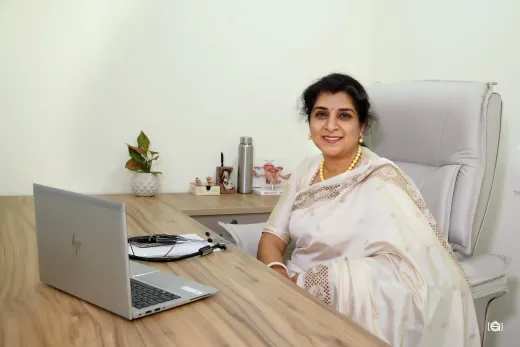

Medically reviewed by Dr. Shweta Agarwal, MBBS, DGO. Last updated: 16 July 2026.
Information on this page is educational and does not replace a medical consultation. Outcomes depend on individual clinical factors.
PCOD meaning: are PCOD and PCOS the same thing?
Yes, for practical purposes. PCOD (Polycystic Ovarian Disease) is the everyday term most patients and families in Chandrapur and across India use. PCOS (Polycystic Ovary Syndrome) is the name used in current medical guidelines. International guidance does not define PCOD as a separate, milder disease — both terms point to the same syndrome: a chronic hormonal, metabolic, and reproductive condition in which the ovaries may produce excess androgens and ovulation becomes irregular.
Two clarifications many patients find reassuring:
- The "cysts" seen on ultrasound are usually many small immature follicles, not disease-causing cysts. Some women with PCOS have normal-looking ovaries on scan, and some women with polycystic-appearing ovaries do not have PCOS.
- PCOS can affect women at any body size. A normal weight does not rule it out, and weight gain is not anyone's "fault."
Terminology note: In May 2026, international guideline bodies began transitioning the name to PMOS (Polyendocrine Metabolic Ovarian Syndrome), formerly PCOS. The underlying diagnostic and management recommendations are unchanged. On this page we use PCOS / PCOD, since these remain the terms patients search and speak. In Marathi, families often ask "पीसीओडी म्हणजे काय?" — the answer above applies equally.
What are the symptoms of PCOS / PCOD?
Symptoms vary widely from woman to woman. Common ones include:
- Irregular, infrequent, or absent periods — or, in some women, prolonged or heavy bleeding.
- Irregular or absent ovulation, which can make conception harder to predict.
- Excess facial or body hair (hirsutism) on the chin, upper lip, chest, or abdomen.
- Acne and oily skin that persists beyond the teenage years.
- Scalp hair thinning (female-pattern hair loss).
- Weight gain or difficulty managing weight — possible, but not present in every woman.
- Darkened, thickened skin at the neck or underarms (acanthosis nigricans), a possible sign of insulin resistance.
- Emotional health effects — anxiety, low mood, and body-image concerns are more common with PCOS and deserve the same attention as physical symptoms.
Persistent or severe pelvic pain is not a typical PCOS symptom and needs evaluation for other causes. If your main concern is irregular periods, our menstrual problems page explains the wider range of causes. You can also try our PCOS symptom self-check tool — it is a guide, not a diagnosis.
How is PCOS / PCOD diagnosed? (Rotterdam criteria)
There is no single test for PCOS. In adults, diagnosis follows the internationally accepted Rotterdam framework: at least two of three features, after other causes (such as thyroid disorders, high prolactin, or pregnancy) have been excluded:
- Irregular cycles or ovulatory dysfunction
- Clinical or biochemical androgen excess (symptoms such as hirsutism, or elevated testosterone on an accurate blood assay)
- Polycystic ovarian appearance on ultrasound — or, in adults, an AMH blood level used as an alternative route in the current algorithm
Two practical points follow from this:
- An ultrasound alone cannot diagnose PCOS, and if you already have irregular cycles plus androgen excess, a scan may not even be needed for the diagnosis.
- Adolescents are assessed differently. In teenage girls, both irregular cycles (judged by time since the first period) and androgen excess are required; ultrasound and AMH are not recommended for adolescent diagnosis.
PCOS is not the same as having an ovarian cyst; read our ovarian-cysts guide if that was the finding on your scan.
At Aansh Hospital in Chandrapur, a first PCOS / PCOD visit with Dr. Shweta Agarwal typically covers your menstrual and medical history, medication history, examination as appropriate, and a personalised decision about which blood tests or ultrasound are actually needed — not a fixed panel for everyone. Because PCOS carries metabolic implications at any weight, glucose status, lipids, and blood pressure are also assessed at diagnosis and monitored periodically.
Where pelvic ultrasound is used, it is purely diagnostic. Sex determination is illegal and is not performed here.
How is PCOS / PCOD managed? (Management, not cure)
PCOS is a long-term condition — claims of a "permanent cure" or a "one-month fix" are misleading. What honest, guideline-based care offers is management: reducing symptoms, supporting cycle regularity, protecting long-term health, and supporting fertility when pregnancy is desired. The plan is built around your priority, decided together with the doctor.
Lifestyle support — the foundation for everyone
Healthy eating and regular physical activity are core care for every woman with PCOS, whatever her weight. There is no single proven "best PCOS diet" — a sustainable, culturally familiar pattern (vegetables, pulses, whole grains, adequate protein, fewer highly processed foods) is more useful than any crash or fad diet. If higher weight is present, the goal discussed is realistic, gradual change — never a promised number.
Cycle, skin, and hair management
For women not currently planning pregnancy, options a clinician may consider after individual assessment include combined oral contraceptive pills for cycle regulation and hirsutism, and anti-androgen medicines where appropriate (these require reliable contraception and are never for self-medication). Cosmetic and dermatology options for unwanted hair or acne can be part of the plan. Long gaps without periods should always be reviewed, because prolonged untreated absence of periods can affect the uterine lining over time.
Metabolic and long-term health care
Metformin may be considered in selected patients, mainly for metabolic reasons — it is not a universal PCOS medicine. Diabetes risk, lipids, blood pressure, sleep, and mental wellbeing are monitored and addressed as indicated. This ongoing gynaecological care is available locally through our gynaecology services in Chandrapur and the broader women's health hub.
PCOS / PCOD and fertility: can I get pregnant?
PCOS is a common cause of anovulatory infertility — but it does not mean permanent infertility. Some women with PCOS conceive without any fertility treatment; others need help with ovulation or have additional fertility factors to address.
When pregnancy is the goal, the sequence is stepwise and individualised:
- Assessment first — confirming whether ovulation is occurring, plus the couple's wider fertility picture (including semen analysis, and tubal assessment where indicated).
- Ovulation induction — for anovulatory PCOS with no other fertility factor, current international guidance recommends letrozole as the first-line medicine a clinician may consider. Learn more on our ovulation induction page.
- IUI — considered depending on semen findings, tubal patency, age, and response to ovulation induction; it is not an automatic next step for everyone.
- IVF — not first-line just because a woman has PCOS. It may be considered when earlier steps have not led to pregnancy, or when another clear IVF indication exists.
Two honest cautions: PCOS pregnancies carry somewhat higher risks of gestational diabetes and blood-pressure disorders, so preconception assessment and antenatal monitoring matter. And because PCOS increases the risk of ovarian hyperstimulation (OHSS) during fertility stimulation, protocols and monitoring at Aansh are individualised to reduce that risk. No treatment can guarantee pregnancy; outcomes depend on individual clinical factors.
When should I see a doctor in Chandrapur?
Book a gynaecology assessment if:
- Your periods are consistently irregular, very infrequent, or absent for a prolonged stretch.
- Bleeding is unusually heavy or prolonged.
- Facial/body hair growth, acne, or scalp hair thinning is troubling you.
- You have been trying to conceive and ovulation seems unpredictable.
- You have a family history of PCOS or type 2 diabetes and symptoms concern you.
Sudden, severe androgen symptoms or severe pelvic pain need prompt review, because another condition may be responsible.
In Chandrapur, PCOS / PCOD consultations at Aansh Hospital & IVF Center are led by Dr. Shweta Agarwal, MBBS, DGO — a female gynaecologist — in Marathi, Hindi, or English, a comfort many local women and families specifically ask for. Women also travel to us from nearby Vidarbha towns and the Gadchiroli belt for hormonal and fertility evaluation. If you have already been given a diagnosis or treatment plan elsewhere and want it reviewed, you can request a second opinion.
References
- International Evidence-based Guideline for the Assessment and Management of PCOS (2023; PMOS terminology update 2026) — Monash University. https://www.monash.edu/medicine/mchri/pcos/guideline
- Recommendations from the 2023 International Evidence-based Guideline for PCOS — ASRM. https://prod.asrm.org/practice-guidance/practice-committee-documents/recommendations-from-the-2023-international-evidence-based-guideline-for-the-assessment-and-management-of-polycystic-ovary-syndrome/
- Polycystic ovary syndrome — WHO fact sheet. https://www.who.int/news-room/fact-sheets/detail/polycystic-ovary-syndrome
- Prevention and treatment of moderate and severe OHSS — ASRM practice guideline. https://integration.asrm.org/globalassets/_asrm/practice-guidance/practice-guidelines/pdf/prevention_and_treatment_of_moderate_to_severe_ohss.pdf