









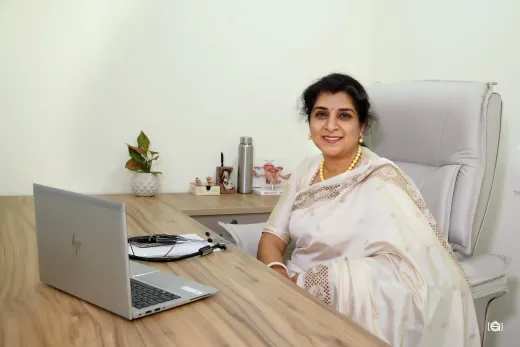
Medically reviewed by Dr. Shweta Agarwal, MBBS, DGO. Last updated: July 2026.
Information on this page is educational and does not replace a medical consultation. Outcomes depend on individual clinical factors.
For many women in Chandrapur, the first question is not just "which gynaecologist?" but "is there a female gynaecologist I can talk to comfortably, in my own language?" At Aansh Hospital & IVF Center — a government-registered Level-2 ART clinic (see our registrations) — that doctor is Dr. Shweta Agarwal. In Marathi, patients often search for a स्त्री रोग तज्ज्ञ or महिला स्त्रीरोग तज्ज्ञ चंद्रपूर; this page explains, in plain language, what she treats and when to book a visit.
Why many women prefer a lady gynaecologist in Chandrapur
Gynaecological concerns are personal — periods, discharge, intimate discomfort, pregnancy worries, menopause changes. Preferring a woman doctor is not about one doctor being "better" than another; it is about comfort, privacy and being able to describe symptoms freely. When a patient can speak openly — and in Marathi or Hindi if that is easier — the history is more complete and the evaluation is more accurate.
Dr. Shweta Agarwal is a female gynaecologist with MBBS and DGO qualifications in Obstetrics & Gynaecology, practising in Chandrapur city. She consults at Aansh Hospital & IVF Center at Arjun Tower, Ambedkar Square. No referral is generally needed for an outpatient appointment — call ahead to confirm current OPD timings, and bring any previous prescriptions, reports or scans with you.
Conditions treated across a woman's life
A gynaecologist cares for women from adolescence through the reproductive years to menopause and beyond. Each concern below has its own detailed page; this section routes you to the right place.
Menstrual problems — heavy, irregular, painful or missed periods
Irregular, absent, unusually heavy or very painful periods are among the most common reasons to see a gynaecologist. Possible causes range from hormonal and ovulatory disorders to thyroid conditions, fibroids or polyps, and pregnancy-related causes — so diagnosis comes before any treatment is chosen. If your cycle has changed noticeably, an assessment is worthwhile. Read more on the menstrual problems page.
PCOS / PCOD
Polycystic Ovary Syndrome affects menstrual regularity, ovulation, androgen levels and metabolic health. PCOS is not diagnosed from an ultrasound or an "ovarian cyst" finding alone — evaluation depends on your symptoms, cycle history and examination, and the tests your doctor advises will vary from woman to woman. Care is tailored to your goals, whether that is cycle regulation, symptom management or planning a pregnancy. See the dedicated PCOS page.
White discharge, vaginal infections and intimate symptoms
A change in discharge — colour, amount, texture or odour — especially with itching, burning, irritation, pain during sex or urinary symptoms, deserves a proper check. Different infections and non-infectious conditions can look very similar, so examination or testing may be needed before cause-specific care is started. Details are on the white discharge and vaginal infection page.
Fibroids, ovarian cysts and pelvic pain
Fibroids are benign growths of the uterine muscle. Some cause no symptoms at all and only need observation; others may be linked to heavy or prolonged bleeding, anaemia, pelvic pressure or pain, urinary or bowel symptoms, or fertility concerns. Whether treatment is needed depends on symptoms, size and location, age and pregnancy plans — not every fibroid requires intervention. Persistent pelvic pain, worsening period pain or pain during sex also merits assessment, as conditions like endometriosis or ovarian cysts may be involved.
Pregnancy and antenatal care (ANC)
Dr. Shweta provides pregnancy confirmation, routine prenatal care and antenatal check-ups in Chandrapur, with structured high-risk pregnancy care where a pregnancy needs closer monitoring. Where pregnancy scans are advised, they are used only for the medical care of mother and baby — sex determination is illegal in India and is not performed here (PCPNDT Act).
Menopause and perimenopause
Changes in cycle regularity or flow, hot flushes, night sweats, sleep or mood changes, vaginal dryness and urinary symptoms are common in the years around menopause. Menopause is a life stage, not a disease — but its symptoms can be discussed and managed based on your history, risks, preferences and examination, so daily life stays comfortable.
Preventive and reproductive health
Well-woman consultations, contraception and preconception counselling, cervical screening when due, and evaluation of abnormal bleeding are all part of routine care. Screening timing depends on your age, previous results, risk factors and the method used — Dr. Shweta will advise the schedule appropriate for you. The women's health overview covers the full range of services.
Some gynaecological conditions — PCOS, endometriosis, certain fibroids, tubal disease — may also affect fertility in some women. Because Aansh is a registered Level-2 ART clinic, fertility evaluation is available at the same Chandrapur centre if and when it becomes relevant; it is an option, not an assumption.
When should you see a gynaecologist?
Book a consultation if you notice any of the following — they are worth evaluating even if they seem minor:
- Periods that become much heavier, more painful, longer or less predictable than usual
- Bleeding between periods, after sex, or any bleeding after menopause
- Unusual discharge, odour, itching, burning or irritation
- New or persistent pelvic pain or pressure
- Missed periods, or questions about contraception or planning a pregnancy
- Pregnancy care — early confirmation and regular antenatal visits
- Menopause symptoms affecting sleep, mood or daily life
Seek urgent care for severe or sudden pelvic or abdominal pain, very heavy bleeding, fainting or dizziness, fever with pelvic pain, or bleeding or pain during pregnancy.
If you already have a diagnosis or reports from another doctor and want an independent view, you can also request a free second opinion.
Visit the clinic
Aansh Hospital & IVF Center — 5th Floor, Arjun Tower, above Dixit Super Speciality Hospital, Ambedkar Square, Chandrapur, Maharashtra.
- WhatsApp: Book a gynaecology appointment
- Call: +91 80056 85160
- Second opinion: Request a free second opinion