









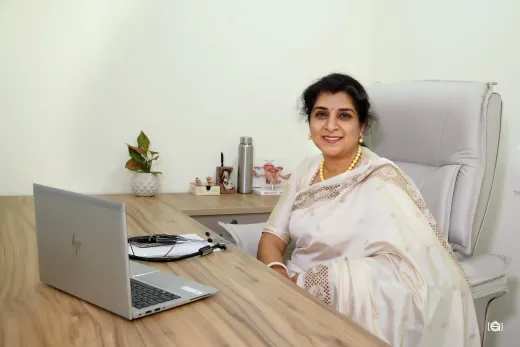
Medically reviewed by Dr. Shweta Agarwal, MBBS, DGO. Last updated: July 2026.
Information on this page is educational and does not replace a medical consultation. Outcomes depend on individual clinical factors.
What counts as a menstrual problem?
A typical menstrual cycle — counted from the first day of one period to the first day of the next — usually falls between about 21 and 35 days, with bleeding lasting up to about 7 days. But these numbers are a guide, not a rule. Cycles are naturally more variable in the first years after periods begin, after childbirth or during breastfeeding, and in the years approaching menopause.
The more useful question is this: has your usual pattern changed persistently, or are your periods interfering with your daily life? If either is true, it deserves evaluation. Menstrual problems generally fall into four common patterns:
- Irregular or infrequent periods (अनियमित पाळी / oligomenorrhoea): cycles that have become unpredictable, come many weeks late, or change repeatedly from your usual pattern.
- Heavy periods (जास्त रक्तस्राव / menorrhagia, also called heavy menstrual bleeding): bleeding that is excessive for you — soaking through pads or tampons very frequently, needing night-time changes or double protection, passing large clots, or bleeding that disrupts work, school, or social life. The impact on your life matters more than any millilitre number.
- Painful periods (पाळीच्या वेदना / dysmenorrhoea): cramping or pain before or during periods that disrupts normal activity.
- Missed or absent periods (amenorrhoea): no period for 3 months or more without an expected explanation such as pregnancy or breastfeeding — and even those situations still deserve appropriate assessment.
Spotting or bleeding between periods, after sex, or after menopause also counts as abnormal bleeding and should always be discussed with a gynaecologist.
What causes irregular periods?
Irregular cycles usually reflect a disturbance in ovulation, and there are many possible reasons. A doctor establishes the cause from your history, examination, and selective tests — it cannot be guessed from symptoms alone. Common causes include:
- Pregnancy — always considered first when biologically possible. Bleeding in early pregnancy can signal miscarriage or ectopic pregnancy and may need urgent care.
- PCOS (also commonly called PCOD) — one of the most frequent causes of irregular, infrequent, or sometimes heavy periods. Read more on our PCOS page.
- Thyroid disorders and raised prolactin — both can disturb ovulation and cycle timing.
- Stress, weight change, and over-exercise — major psychological or physical stress, rapid weight gain or loss, or very low food intake can disrupt the hormonal signals that control the cycle. That said, irregularity should never be dismissed as "just stress" without evaluation.
- Life stages — puberty, the postpartum/breastfeeding period, and perimenopause naturally change cycle regularity.
- Medicines and contraception — hormonal contraceptives, the copper IUD, blood thinners, and some other medicines can alter bleeding patterns.
What causes heavy periods?
Heavy menstrual bleeding can come from structural causes in the uterus or from hormonal and blood-related causes:
- Uterine fibroids — non-cancerous growths of the uterus, a leading structural cause of heavy bleeding.
- Adenomyosis and endometrial polyps — other uterine causes of heavy or prolonged bleeding.
- Ovulation problems — including PCOS and thyroid-related dysfunction, which can cause heavy as well as irregular bleeding.
- Bleeding disorders — heavy periods since the very first cycles, especially with a personal or family history of easy bruising or unusual bleeding, raise the possibility of an inherited bleeding disorder such as von Willebrand disease.
- Medicines and contraception — some can increase bleeding.
- Less commonly, endometrial hyperplasia or malignancy — one reason persistent abnormal bleeding should never be ignored.
Heavy bleeding over time can also cause iron-deficiency anaemia — tiredness, weakness, breathlessness, palpitations, or dizziness. Not everyone with heavy periods becomes anaemic, but these symptoms alongside heavy bleeding are a clear reason to be evaluated.
What causes painful periods?
Period pain is divided into two types:
- Primary dysmenorrhoea is common cramping without underlying pelvic disease, driven by natural chemicals called prostaglandins that make the uterus contract. It typically starts within the first years of having periods.
- Secondary dysmenorrhoea has an underlying cause — such as endometriosis, adenomyosis, fibroids, ovarian cysts, or pelvic infection — and often becomes more severe or prolonged over time.
Clues that pain may have an underlying cause include: pain that is new or steadily worsening, pain lasting beyond the first days of the period, pain between periods or during sex, or pain accompanied by fever, unusual discharge, bowel or bladder symptoms, or difficulty conceiving. If pain comes with unusual discharge, see our page on white discharge and vaginal infection.
Pain that disrupts school, work, or sleep is a valid reason to seek care. "Period pain is normal" is not a reason to suffer through every month.
When should you see a gynaecologist — and when is it an emergency?
Arrange a gynaecology assessment if:
- your cycle has changed persistently or become hard to predict;
- your periods have stopped for 3 months or more without an expected explanation;
- bleeding lasts more than about 7 days, needs very frequent pad changes, requires night changes or double protection, includes large clots, or interferes with daily life;
- pain repeatedly disrupts school, work, or sleep, is worsening, or is not helped by usual self-care;
- you bleed between periods, after sex, or after menopause;
- you have irregular cycles and are finding it difficult to conceive; or
- you feel unusually tired, pale, dizzy, or breathless, which can suggest anaemia.
A simple screening aid many patients find useful is the 7-2-1 rule: bleeding for more than 7 days, changing a pad or tampon more often than every 2 hours, or passing clots larger than a 1-rupee/2-rupee coin — any one of these is a signal to see a doctor. It is an educational guide, not a diagnosis.
Seek urgent or emergency care if:
- you are soaking a pad or tampon every hour for more than 2 hours, especially with light-headedness, chest pain, or shortness of breath;
- very heavy bleeding comes with fainting, confusion, or marked weakness;
- pregnancy is possible and bleeding occurs with severe one-sided or lower abdominal pain, shoulder-tip pain, fainting, or dizziness — this can indicate an ectopic pregnancy or other pregnancy complication; or
- severe pelvic pain occurs with fever, vomiting, or foul-smelling discharge.
If you feel seriously unwell, do not count pads — go to the nearest emergency facility.
How are menstrual problems evaluated at Aansh Hospital, Chandrapur?
Evaluation is history-led and selective — not every patient needs every test.
- History: cycle timing, duration, flow, clots or flooding, pain pattern, bleeding between periods or after sex, discharge, medicines and contraception, pregnancy plans, family history, and the effect on your daily life. Keeping a simple period diary — dates, flow, pad changes, pain — before your visit is genuinely helpful.
- Pregnancy test: a foundational first step whenever pregnancy is possible.
- Examination: guided by your history and always with your consent. Adolescents and women who are not sexually active are assessed in an age-appropriate, consent-led way.
- Blood tests, only as indicated: a complete blood count (CBC) is recommended for heavy bleeding to check for anaemia. Thyroid, prolactin, or other hormone tests are done when your symptoms or history suggest them — not as a routine "full panel" for everyone. Coagulation testing is considered when heavy periods have been present since the first cycles with a suggestive family history.
- Pelvic ultrasound, when needed: to assess fibroids, adenomyosis, the ovaries, or other pelvic causes. It is not automatically required for every period complaint. Sex determination is illegal and is not performed here.
- Hysteroscopy, selectively: when history suggests a cause inside the uterine cavity, such as a polyp or submucosal fibroid — particularly with persistent bleeding between periods. It is not a first test for everyone. Learn more about hysteroscopy.
How are menstrual problems managed?
Management depends on the cause, severity, your age and life stage, medical history, contraception needs, and pregnancy plans. There is no single treatment for "period problems," and no doctor can honestly promise a permanently regular or pain-free cycle. What a gynaecologist can do is identify the cause and plan care around it.
- Supportive measures such as a heating pad, adequate rest, and regular activity can ease cramps; persistent or severe symptoms still need assessment.
- Medicines, when prescribed after evaluation, may include anti-inflammatory pain relief for period pain, tranexamic acid for heavy bleeding, or hormonal options such as combined hormonal contraception, progestogens, or a hormonal intrauterine system. Each has contraindications and implications for fertility and contraception — please do not self-start hormonal tablets bought over the counter.
- Treating a diagnosed cause — such as PCOS, thyroid disease, iron deficiency, or a bleeding disorder — is often the most important step.
- Procedures, when structural disease is found: polyps or submucosal fibroids may be treated hysteroscopically; endometriosis-related pain is managed with medicines first and laparoscopy only in selected cases. Surgery is not inevitable, and any decision accounts for your fertility goals.
Some underlying causes — such as PCOS, endometriosis, or fibroids — can also affect ovulation, the uterine cavity, or the chance of conception. The relationship is diagnosis-specific; if you are trying to conceive alongside irregular cycles, mention it during your consultation. You can also request a free second opinion on any previous diagnosis or reports.
Menstrual care at Aansh is part of our broader gynaecology services and women's health care in Chandrapur.
References
- WHO — Menstrual health fact sheet
- NICE NG88 — Heavy menstrual bleeding: assessment and management
- ACOG — Abnormal Uterine Bleeding
- ACOG — Heavy Menstrual Bleeding
- ACOG — Painful Periods
- ACOG — Amenorrhea: Absence of Periods
- NICE NG73 — Endometriosis: diagnosis and management
- Munro MG et al. FIGO systems for normal and abnormal uterine bleeding symptoms and causes: 2018 revisions. International Journal of Gynecology & Obstetrics. 2018.