









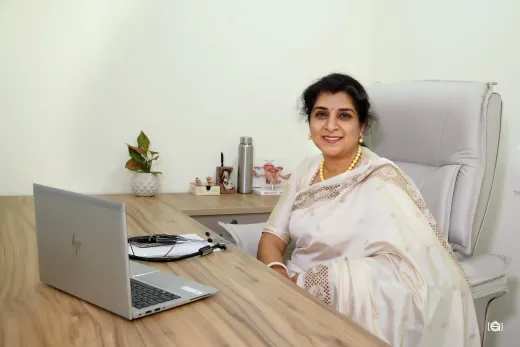
Medically reviewed by Dr. Shweta Agarwal, MBBS, DGO. Last updated: July 2026.
Information on this page is educational and does not replace a medical consultation. Outcomes depend on individual clinical factors.
Consultations can be conducted in Marathi, Hindi and English. In Marathi, menopause is called रजोनिवृत्ती (मेनोपॉज) — a word your doctor may use during the visit.
When is bleeding after menopause a red flag?
Any vaginal bleeding or spotting 12 or more months after your final period should be checked by a gynaecologist promptly — even a single episode, even light pink or brown spotting. Menopause means 12 months without periods, so bleeding after that is not "periods returning." Reassuringly, about 9 in 10 women with postmenopausal bleeding do not have cancer (RCOG, 2025), but evaluation is necessary because bleeding can be an early sign of endometrial cancer — ACOG notes that around 90% of women diagnosed with endometrial cancer had postmenopausal bleeding (ACOG, 2026).
Possible causes range from thinning of vaginal or womb-lining tissue and polyps to HRT-related bleeding, infection, endometrial hyperplasia, or cancer — this page cannot diagnose the cause. Depending on findings, assessment may involve history, a pelvic examination, a transvaginal ultrasound and/or endometrial tissue sampling. (ACOG 2026; RCOG 2025.)
Marathi: पाळी बंद होऊन १२ महिने झाल्यानंतर रक्त किंवा स्पॉटिंग दिसल्यास लगेच स्त्रीरोगतज्ज्ञांकडून तपासणी करून घ्यावी.
If you notice bleeding after menopause, contact a gynaecologist promptly.
What is the difference between perimenopause and menopause?
Perimenopause begins when cycles start changing or symptoms appear and continues until 12 months after the final period; pregnancy is still possible during it. Menopause is confirmed only after 12 months with no period (no other cause). Postmenopause is all the years afterward. Natural menopause generally occurs between 45 and 55 years worldwide. (WHO 2024.)
| Stage | What it means | Periods | Common experience |
|---|---|---|---|
| Perimenopause (पेरिमेनोपॉज) | Transition before menopause; can last several years | Irregular — pुढे-मागे होणे | Hot flushes, sleep and mood change may begin; pregnancy still possible |
| Menopause (रजोनिवृत्ती) | Confirmed retrospectively | None for 12 full months | Symptoms may continue; fertility ends naturally |
| Postmenopause | After the 12-month mark | None — any bleeding needs review | Vasomotor symptoms often ease; bone and heart health take priority |
You do not need to wait until periods stop completely to discuss symptoms — perimenopause care can begin while cycles are still occurring. (NICE NG23.)
What symptoms are linked to perimenopause and menopause?
Symptoms come from changing and declining oestrogen and vary widely — some women notice little, others a great deal. Common clusters include changing or irregular periods, hot flushes and night sweats, disturbed sleep, vaginal dryness or discomfort, urinary symptoms, mood changes or anxiety, joint aches, and reduced desire. (WHO 2024; NICE NG23.)
| English | Patient-friendly Marathi |
|---|---|
| Irregular periods | पाळी अनियमित होणे / पाळी पुढे-मागे होणे |
| Hot flushes | अचानक अंगातून गरम होणे / गरम झटके येणे |
| Night sweats | रात्री खूप घाम येणे |
| Sleep disturbance | झोप न लागणे / वारंवार जाग येणे |
| Vaginal dryness | योनीत कोरडेपणा किंवा जळजळ |
| Pain during sex | संबंध ठेवताना दुखणे |
| Mood changes | चिडचिड, उदास वाटणे किंवा चिंता वाढणे |
Not every midlife symptom is caused by menopause. Thyroid problems, anaemia, pregnancy, medication effects, low mood and other causes of abnormal bleeding may need consideration based on your history — this is individual assessment, not a fixed test panel. (NICE NG23; ACOG.)
How is menopause diagnosed — do you need blood tests?
In otherwise healthy women aged 45 or over with typical symptoms, perimenopause and menopause are usually identified clinically, without routine blood tests. Perimenopause is recognised from new hot flushes or night sweats plus menstrual-cycle change; menopause from at least 12 months without a period when not using hormonal contraception. (NICE NG23, recommendations 1.3.1–1.3.6, updated 2026.)
For women aged 45 or over, tests such as AMH, oestradiol, antral follicle count or inhibin are not recommended to diagnose menopause. An FSH test may be considered when menopause is suspected at ages 40–45, or under 40 when premature ovarian insufficiency is suspected. (NICE NG23, 1.3.4–1.3.6.) This corrects the older idea that symptoms alone are not enough and hormone tests are always required — for most symptomatic women over 45, they are not.
What are the care options for menopause symptoms?
Care is individualised, not one-size-fits-all, and aims at symptom management and long-term health — not a "cure." Options span lifestyle measures, non-hormonal approaches, local vaginal treatment for genitourinary symptoms, and menopausal hormone therapy (MHT/HRT) where appropriate. Menopause-specific CBT can be considered for hot flushes, alongside or instead of HRT. (NICE NG23, section 1.5, updated 2024/2026.)
| Approach | May help with | Key points |
|---|---|---|
| Lifestyle | Hot flushes, sleep, general health | Regular activity, weight-bearing/resistance exercise, caffeine/alcohol moderation, cooling measures; supportive, not a cure |
| Non-hormonal medicines / CBT | Hot flushes, night sweats | Menopause-specific CBT and certain non-hormonal medicines are options, especially if HRT is unsuitable or not wanted |
| Local vaginal oestrogen | Vaginal dryness, discomfort, some urinary symptoms | Systemic absorption is minimal and serious effects very rare; moisturisers/lubricants are non-hormonal alternatives |
| Systemic HRT (MHT) | Moderate–severe hot flushes, night sweats | Suitability depends on age, time since menopause, uterus status and personal/family history; decided after clinical assessment |
HRT is not equally safe or unsafe for everyone. With a uterus, systemic HRT generally combines oestrogen plus a progestogen to protect the womb lining; oestrogen-only systemic HRT is generally for women who have had a total hysterectomy. Combined HRT can raise breast-cancer risk (rising with duration), while NICE reports oestrogen-only HRT after hysterectomy adds little or no breast-cancer risk. Oral HRT can raise clot and stroke risk, whereas NICE states transdermal (patch/gel) HRT does not increase clot risk. HRT is not offered solely to prevent heart disease or dementia, and unregulated "bioidentical" or herbal products are not shown to be safer. (NICE NG23, section 1.4–1.8; ACOG.) No dose or brand is prescribed on this page — decisions are made in consultation.
Why does menopause affect bone health?
Falling oestrogen around menopause contributes to loss of bone density and a higher risk of osteoporosis and fractures. (WHO 2024.) This does not mean every woman needs an immediate DEXA scan. A risk-based approach considers age, any previous low-trauma fracture, low body weight, family history of hip fracture, smoking, alcohol, long-term steroids, and early/premature menopause. USPSTF (a US reference) recommends osteoporosis screening for all women 65+, and for younger postmenopausal women at increased risk after assessment. (USPSTF 2025; Indian Menopause Society 2026.)
Practical midlife measures include regular weight-bearing and resistance activity, adequate dietary calcium and protein, vitamin D assessment where clinically indicated, not smoking, moderating alcohol, and falls prevention. A midlife review can also cover blood pressure, diabetes and cholesterol risk, breast and cervical screening status, and mental and sexual health. Supplement doses should be individualised, not assumed. (NICE NG23; Indian Menopause Society 2026.)
Early menopause and premature ovarian insufficiency (under 40–44)
Early menopause means menopause at ages 40–44; premature ovarian insufficiency (POI) is loss of normal ovarian function before age 40 and is not the same as natural menopause — some ovarian activity can persist intermittently. Causes include genetic, autoimmune and treatment-related (chemotherapy, pelvic radiotherapy, ovarian surgery) factors, though many cases are unexplained. If you are under 40 with irregular or absent periods, or have a raised FSH result, specialist assessment is advised rather than self-diagnosis. (NICE NG23; ASRM/ESHRE/IMS POI guideline, 2025.)
Fertility can still matter here: pregnancy remains possible until menopause is confirmed, so contraception and any pregnancy plans are worth discussing individually — HRT is not a contraceptive. Where fertility is a concern, educational options include low AMH assessment, egg freezing and, before cancer treatment, oncofertility — discussed in consultation, with no outcome promises.
When should you see a gynaecologist in Chandrapur?
Consider a consultation with Dr. Shweta Agarwal, a lady gynaecologist in Chandrapur, if hot flushes, sleep or mood changes are affecting daily life; if vaginal or urinary discomfort or pain with sex is troubling you; if periods are changing and you would like a midlife health review; or if you are under 40 with irregular or absent periods. Any bleeding after menopause should be assessed promptly. Booking a review does not commit you to any treatment — it gives you information and options. See also women's health care in Chandrapur and routine gynaecology and midlife review.
References
- WHO — "Menopause," 16 October 2024.
- NICE NG23 — "Menopause: identification and management," updated 15 April 2026.
- ACOG — "Perimenopausal Bleeding and Bleeding After Menopause," reviewed 2026; and updated postmenopausal-bleeding guidance news release, 16 April 2026.
- RCOG — Postmenopausal Bleeding patient information, 2025.
- ACOG — "Hormone Therapy for Menopause."
- ASRM/ESHRE/IMS — Evidence-based guideline: Premature Ovarian Insufficiency, 2025.
- USPSTF — Osteoporosis screening, 14 January 2025.
- Indian Menopause Society — Clinical Practice Guidelines for Menopause, 2026.