









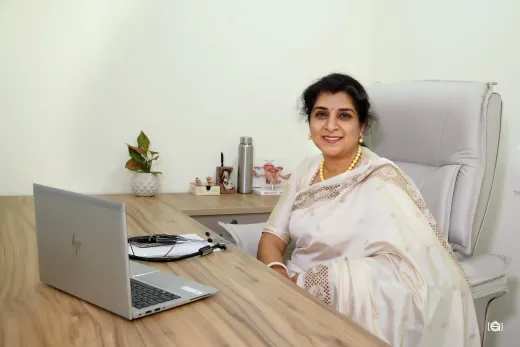
Medically reviewed by Dr. Shweta Agarwal, MBBS, DGO. Last updated: 16 July 2026.
Information on this page is educational and does not replace a medical consultation. Outcomes depend on individual clinical factors.
What is family planning, and what methods are available in Chandrapur?
Family planning means choosing whether and when to have children, using information, counselling, and contraceptive methods — a voluntary decision that belongs to the woman or couple, not to anyone else (WHO, 2025). India's national programme (NHM/MoHFW) offers a basket of modern methods: condoms (Nirodh), daily pills such as Mala-N, the weekly non-hormonal pill Chhaya (centchroman), the three-monthly Antara injection, Copper-T / IUCD, emergency contraceptive pills, and male and female sterilisation.
At Aansh Hospital & IVF Center in Chandrapur, contraception counselling covers this full range: how each method works, its effectiveness in real-world use, expected side effects, reversibility, and which options fit your medical history. Methods split into two broad goals families in Chandrapur usually describe:
- Spacing (अंतर): delaying or spacing pregnancies — condoms, pills (गर्भनिरोधक गोळ्या), the three-monthly injection, Copper-T (कॉपर-टी / तांबी), or a hormonal IUD.
- Limiting (कायमस्वरूपी): when the family is complete — tubal ligation (नसबंदी / ट्यूबेक्टॉमी) for women, or vasectomy for men (counselling and referral pathway; on-site availability discussed at consultation).
Counselling is confidential, and you are not required to bring your partner for reversible methods — though couples are welcome. Which specific pill brands, IUD models, and injectable stock are available at Aansh at any time is confirmed during your visit rather than promised online.
Which contraceptive method is right for me?
There is no universal best method. The medically appropriate choice depends on whether you want children later, your health history (blood pressure, migraine with aura, clotting risk, smoking, breastfeeding), your period pattern, STI risk, privacy needs, and whether you prefer a daily, three-monthly, long-acting, or permanent option (WHO, Family Planning fact sheet 2025; WHO Medical Eligibility Criteria, 6th edition, 2025). A gynaecologist screens for these factors before recommending anything — combined pills, for example, are not suitable for every woman, which is why medical evaluation matters before starting them.
Comparing common methods (typical-use effectiveness)
Effectiveness below is given as typical-use failure in the first year — for example, "7 per 100" means about 7 pregnancies among 100 people using that method in real life for one year (CDC, Contraception and Birth Control Methods, 2024). These are population estimates from international health authorities, not Aansh clinic outcomes or guarantees. No method is 100% effective for sexually active couples.
| Method | How it is used | Pregnancies per 100 users in first year (typical use) | Hormones? | STI protection? | Reversibility | Source |
|---|---|---|---|---|---|---|
| Condom (कंडोम / निरोध) | Every act of sex | 13 | No | Yes — only method that reduces STI/HIV risk | Immediate | CDC 2024; WHO 2025 |
| Daily pill (combined or progestin-only) | Taken every day | 7 | Yes | No | Fertility returns quickly after stopping | WHO Oral Contraceptives 2025; CDC 2024 |
| Injection (Antara / DMPA) | One injection every 3 months | 4 | Yes | No | Return to fertility may take ~7–10 months after last dose | MoHFW/NHM Antara leaflet; CDC 2024 |
| Copper-T / copper IUD (तांबी) | Placed in uterus by trained provider | 0.8 | No | No | Fertility returns immediately after removal | WHO IUD fact sheet 2026; CDC 2024 |
| Hormonal IUD | Placed in uterus by trained provider | 0.1–0.4 | Yes (local) | No | Fertility returns after removal | WHO IUD fact sheet 2026; CDC 2024 |
| Tubal ligation (ट्यूबेक्टॉमी) | One-time surgical procedure | 0.5 | No | No | Intended permanent | CDC 2024; GoI/NHM manuals |
| Vasectomy (male) | One-time procedure | 0.15 after semen-test clearance | No | No | Intended permanent; needs backup until semen test confirms, often ~12 weeks | CDC 2024 |
Copper-T in Chandrapur: what it is, insertion, and side effects
A Copper-T (कॉपर-टी, called तांबी in everyday Marathi) is a small, hormone-free device a trained provider places in the uterus during an outpatient visit; the copper impairs sperm so fertilisation is unlikely. Fewer than 1 in 100 users become pregnant in the first year, and fertility returns immediately after removal (WHO, Intrauterine Devices fact sheet, January 2026).
Duration: the Government of India's IUCD manual lists CuT 380A for up to 10 years and IUCD 375 for up to 5 years — duration depends on the exact device, which is confirmed at consultation (GoI/NHM Reference Manual for IUCD Services).
Insertion and what to expect: insertion is an outpatient procedure; cramping during and after insertion is common and varies from mild to strong — no clinic should promise a "painless" insertion. In the first few months, periods may become heavier or longer and cramps stronger; this usually settles. Rarely, the device can be expelled, or insertion can cause perforation or infection, which is why eligibility assessment (including checking for untreated reproductive-tract infection) comes first (WHO IUD fact sheet 2026; CDC U.S. Medical Eligibility Criteria 2024).
Two myths, answered: a Copper-T does not travel through the body, and it does not cause infertility (WHO, 2026). It can also be considered by women who have not yet had children, when medically suitable — the idea that Copper-T is "only after children" is a myth. If threads ever feel missing, or you have fever, severe pain, or unusual discharge after insertion, return for evaluation; assessment may include an examination and, if needed, an ultrasound. As required by the PCPNDT Act, sex determination is illegal and is not performed at Aansh; any ultrasound here is purely for clinical evaluation.
Many women in Chandrapur prefer a female gynaecologist for IUD insertion and intimate examinations; at Aansh, insertion and counselling are with Dr. Shweta Agarwal, MBBS, DGO.
Contraceptive pills (गर्भनिरोधक गोळ्या): daily pills, Chhaya, and safety screening
Daily contraceptive pills come in two main categories: combined pills (estrogen + progestin, e.g. Mala-N in the public programme) and progestin-only pills; India's programme also includes Chhaya, a weekly non-hormonal (centchroman) pill (WHO, Oral Contraceptives, December 2025; NHM family-planning guidelines). Pills are effective when taken consistently — about 7 pregnancies per 100 users per year with typical use, and about 1 per 100 with perfect use (WHO 2025; CDC 2024). Fertility returns quickly after stopping.
Although many pills are sold at pharmacies, medical screening before starting — blood pressure, smoking status, migraine with aura, clotting or stroke history, breastfeeding status, and interacting medicines — is what keeps pill use safe (WHO Medical Eligibility Criteria, 6th edition, 2025). Early side effects such as spotting, nausea, or breast tenderness often settle; seek care promptly for severe leg pain, chest pain, severe headache, or vision changes. There is no single "best pill" — the right one depends on your history. There is also no reliable Ayurvedic or herbal tablet established as a contraceptive standard of care; do not rely on unproven products to prevent pregnancy.
The three-month injection (Antara / तीन महिन्यांचे इंजेक्शन)
India's Antara programme uses a progestin injection (DMPA/MPA) that gives about three months (90 days) of contraception per dose — a private option with no daily action needed (MoHFW/NHM Antara provider leaflet). It suits women who want an effective, discreet method, but counselling should cover three things honestly: bleeding usually changes (spotting, irregular or prolonged bleeding, or no periods at all); repeat injections must be on time; and return of fertility after the last injection can take about 7–10 months — a delay, not permanent infertility (MoHFW/NHM Antara leaflet). The same guidance notes a slight, reviewable effect on bone density in the first two years, and the injection does not protect against HIV/STIs. Availability of the injection at Aansh is confirmed at consultation.
Emergency contraception: the 72-hour pill, explained without panic
If a condom broke or sex was unprotected, take a levonorgestrel emergency contraceptive pill (आपत्कालीन गर्भनिरोधक गोळी, e.g. the "I-pill" type) as soon as possible — preferably within 72 hours; effectiveness falls with every day of delay (GoI/NHM emergency-contraception provider guideline). WHO guidance notes some regimens retain effect up to 120 hours, and that a copper IUD inserted by a trained provider within 5 days is the most effective emergency option for eligible users — and can then stay on as regular contraception (WHO, Emergency Contraception fact sheet).
Three facts worth being clear about:
- Emergency contraception is not an abortion pill. It works mainly by preventing or delaying ovulation and cannot interrupt an established pregnancy (WHO; GoI/NHM guideline). That is the only distinction this page makes — it is educational, not a service pitch.
- It does not protect later acts of sex in the same cycle, and it does not protect against STIs. A regular method is far more effective for ongoing contraception — and asking about one carries no judgement.
- If vomiting occurs within 2 hours of the pill, the dose should be repeated; if your next period is more than a week late, take a pregnancy test or contact a clinician. Severe lower abdominal pain, faintness, or very heavy bleeding needs prompt medical assessment (GoI/NHM guideline).
Permanent methods: tubal ligation and vasectomy
Tubal ligation (ट्यूबेक्टॉमी) and vasectomy are intended to be permanent and should be chosen only after voluntary, informed counselling — never under pressure, and never assumed to be the woman's responsibility by default (WHO person-centred family-planning principles; GoI/NHM sterilisation manuals). Tubal ligation blocks the fallopian tubes and works immediately; vasectomy is a simpler male procedure but is not immediately effective — another method is needed until semen testing confirms clearance, commonly around 12 weeks (CDC, 2024). Neither protects against STIs.
At Aansh, counselling for permanent methods is available with Dr. Shweta Agarwal; the operative pathway (on-site tubal ligation scheduling, and the vasectomy referral route for men) is discussed and confirmed at consultation. Reversal of either procedure is unreliable and should never be assumed — if future pregnancy is a possibility in your mind, a reversible long-acting method like an IUD is usually the safer discussion to have first.
Contraception after delivery and while breastfeeding
Yes, contraception is possible while breastfeeding — several progestin-only options and IUDs may be suitable, but the right choice and the right starting time depend on how many weeks have passed since delivery and your individual health (WHO Medical Eligibility Criteria, 6th edition, 2025; NHM Maharashtra Family Welfare Programme). Postpartum IUD placement is part of India's national programme; timing at Aansh is assessed individually rather than by a one-size-fits-all rule. If your periods are heavy or irregular before choosing a method, that deserves evaluation first — a copper IUD can make heavy bleeding worse, while a hormonal IUD may reduce diagnosed heavy bleeding in suitable users (WHO IUD 2026; CDC U.S. MEC 2024). Contraception also remains relevant in the years before menopause is confirmed, and pills are sometimes used for cycle management in PCOS when pregnancy is not currently desired.
References
- World Health Organization. Family planning/contraception methods, July 2025.
- World Health Organization. Medical eligibility criteria for contraceptive use, 6th edition, November 2025.
- World Health Organization. Oral contraceptives, December 2025.
- World Health Organization. Intrauterine devices (IUDs), January 2026.
- World Health Organization. Emergency contraception, 2021.
- World Health Organization. Condoms, February 2025.
- US Centers for Disease Control and Prevention. Contraception and Birth Control Methods, 2024, and U.S. Medical Eligibility Criteria for Contraceptive Use, 2024.
- National Health Mission, MoHFW, Government of India. Family Planning guidelines, including the Antara provider leaflet, Reference Manual for IUCD Services, and Emergency Contraceptive Pill guidelines.
- NHM Maharashtra. कुटुंब कल्याण कार्यक्रम / Family Welfare Programme.