









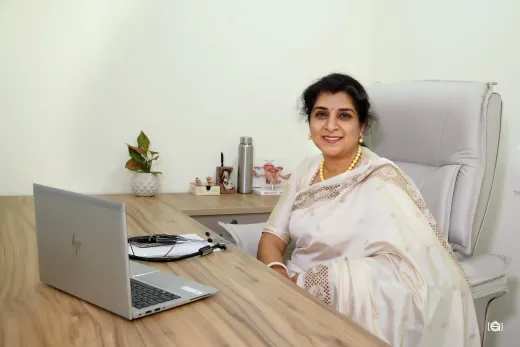
By Dr. Shweta Agarwal, MBBS, DGO Medically reviewed by Dr. Shweta Agarwal, MBBS, DGO Last updated: July 2026
Information on this page is educational and does not replace a medical consultation. Timelines, protocols and outcomes depend on individual clinical factors and are decided case by case.
Aansh Hospital & IVF Center is a government-registered Level-2 ART clinic (Reg. No. MH/AC/2024/15441/L2/Chandrapur/132), with our headquarters and in-house embryology lab in Chandrapur, serving families across Vidarbha and northern Telangana. Treatment is led by Dr. Shweta Agarwal (MBBS, DGO), with embryology led by Aayush Agarwal, Ph.D.. Our government ART registration is verifiable on the National ART & Surrogacy Registry.
Most couples in Vidarbha first hear the word "IVF" from a relative, a neighbour, or a brief conversation in a busy OPD — and then go home with more questions than answers. Is टेस्ट ट्यूब बेबी something different from IVF? Does the baby really grow in a glass tube? Is it only for people who have "failed" everything else? What does it actually cost, and will we have to spend weeks in Nagpur or Pune?
This guide answers those questions in order. The headings deliberately use the exact Marathi phrases families search for, so you can jump to the section you need.
आयव्हीएफ म्हणजे काय? (What is IVF?)
IVF is a treatment in which fertilisation is carried out in a laboratory rather than inside the body. In a natural conception, an egg travels from the ovary into the fallopian tube, meets sperm there, fertilises, and the resulting embryo travels down into the uterus and implants. IVF performs the middle part of that journey outside the body.
A typical IVF cycle involves:
- Ovarian stimulation — hormone injections so that several eggs mature in one cycle instead of the usual one.
- Egg retrieval — the eggs are collected in a short procedure, usually under sedation.
- Fertilisation in the lab — in the embryology laboratory, eggs and sperm are put together, either by placing prepared sperm around each egg (conventional IVF) or by injecting a single sperm directly into an egg (ICSI).
- Embryo culture — fertilised eggs are grown in an incubator for a few days, commonly to Day 3 or Day 5, depending on the protocol and how the embryos develop.
- Embryo transfer — one embryo (occasionally two, by clinical decision) is placed into the uterus in a short outpatient procedure.
- Pregnancy test — a beta-hCG blood test roughly two weeks later shows whether a pregnancy has started.
Transfer does not guarantee that the embryo will implant. If implantation is successful, the pregnancy then develops in the uterus and is looked after like any other pregnancy — though pregnancies after fertility treatment sometimes need closer monitoring, which your obstetrician will advise on.
आयव्हीएफ चे पूर्ण रूप आणि मराठी अर्थ (IVF full form and meaning — ivf full form marathi)
IVF stands for in vitro fertilisation. "In vitro" is Latin for "in glass" — meaning in a laboratory dish rather than inside the body. "Fertilisation" is the joining of sperm and egg. So the full form, in plain Marathi terms, is प्रयोगशाळेत बीजांड व शुक्राणूचे फलन — fertilisation of egg and sperm performed in a laboratory, outside the body.
That single phrase, "in glass," is where the popular name "test tube baby" came from — and it is also the source of the most common misunderstanding families arrive with.
टेस्ट ट्यूब बेबी म्हणजे काय? Is it the same as IVF?
"टेस्ट ट्यूब बेबी" is the popular term for a baby conceived through IVF. There is no separate "test tube baby" procedure that is different from, better than, or cheaper than IVF. IVF is the medical term; test tube baby is the everyday term for the result.
Two things worth stating clearly, because families ask them at almost every first consultation:
- The baby does not develop in a tube, a glass, or a machine. Only fertilisation and the first few days of embryo development happen in the laboratory. After the embryo is transferred and implants, the pregnancy is carried in the uterus.
- Whose genetic material is used depends on the plan. When the couple's own egg and sperm are used, the embryo carries their genetic material. If donor egg or donor sperm is used, the genetic contribution changes accordingly — which is a separate matter from legal parentage. Donor gametes may be obtained only through a registered ART bank, with written informed consent, as required by the ART (Regulation) Act, 2021.
If a centre tells you that "test tube baby" is a different or more advanced treatment than IVF and prices it differently, ask them to explain the clinical difference in writing.
वंध्यत्व म्हणजे काय? (What is infertility — and when should you act?)
Infertility (वंध्यत्व) is defined by the World Health Organization as the failure to achieve a pregnancy after 12 months or more of regular, unprotected intercourse.
Separately, professional guidance (ASRM) recommends starting evaluation earlier — at about 6 months — when the woman is 35 or older, because time matters more at that age. That is an earlier-evaluation recommendation, not a different definition of infertility. Evaluation should begin immediately, regardless of how long you have been trying, if there are known risk factors: absent or very irregular periods, known tubal disease, previous pelvic surgery or infection, endometriosis, undescended testes or previous testicular surgery, or recurrent miscarriage.
Two clarifications that matter more than the definition itself:
- वंध्यत्व is not a verdict. It is a signal to investigate. Some couples who meet the definition conceive once a correctable issue is identified and treated — irregular ovulation, a thyroid abnormality, or a treatable cause of a low sperm count.
- वंध्यत्व is not a woman's problem. The NHS describes infertility as arising from a male factor in around one in three couples, a female factor in around one in three, and from both partners or no identified cause in the remainder. This is why a proper workup always tests both partners. A semen analysis is a simple, non-invasive test and should never be postponed while the wife undergoes months of testing alone.
If you have been searching मूल होत नाही काय करावे or गर्भधारणा होत नाही, the first step is not IVF. It is an evaluation of both partners. Read when to see a fertility specialist for the situations where you should not wait 12 months at all.
आयव्हीएफ उपचार कोणासाठी आवश्यक आहे? (Who might need IVF?)
IVF is not the first treatment for most couples. It is considered when a specific barrier makes natural conception or simpler treatment unlikely to succeed. The decision is always individual — the table below shows the reasoning, not a rule.
| Situation | Why IVF may be considered |
|---|---|
| Blocked fallopian tubes | Egg and sperm cannot meet inside the body; IVF bypasses the tubes |
| Severe male factor — very low count or motility | ICSI injects a single sperm directly into the egg |
| Low AMH / reduced ovarian reserve (कमी AMH) | AMH mainly predicts how the ovaries will respond to stimulation and the likely egg yield. It is not on its own an indication for IVF and does not directly measure egg quality — it is interpreted together with age, antral follicle count, diagnosis and treatment history |
| Endometriosis or PCOS | Considered where the specific diagnosis, the woman's age, and the response to appropriate first-line treatment (such as ovulation induction or surgery) indicate it — not automatically |
| Unexplained infertility after IUI cycles | IVF gives information (fertilisation and embryo development) that IUI cannot, and is one option after a defined number of IUI attempts |
| Recurrent pregnancy loss with a known parental chromosomal or genetic abnormality | PGT may be discussed where such an abnormality has been identified — not for recurrent miscarriage generally |
If none of these apply to you, a good clinic will say so and start you on something simpler. Being told "let's go straight to IVF" without a completed workup of both partners is a reason to get a second opinion.
आयव्हीएफ प्रक्रिया टप्प्याटप्प्याने (The IVF process step by step — ivf process in marathi)
One IVF cycle commonly runs about four to six weeks from the start of medication to the pregnancy test, though this varies with the protocol chosen for you. The stage durations below are typical ranges used in routine practice and are adjusted for every patient.
| Stage | What happens | Typical duration |
|---|---|---|
| 1. Evaluation & planning | Hormone tests, AMH, scan, semen analysis; protocol decided | Before the cycle starts |
| 2. Ovarian stimulation (अंडाशय उत्तेजना) | Daily hormone injections so multiple follicles grow | Commonly around 9–12 days; protocol-dependent |
| 3. Follicular monitoring | Scans, usually every few days, to track follicle growth and adjust the dose | During stimulation |
| 4. Trigger injection | A final injection times the eggs' maturation | Given at a fixed interval before retrieval, typically 34–36 hours |
| 5. Egg retrieval (बीजांड संकलन) | Eggs collected through the vagina under ultrasound guidance, usually under sedation | A short procedure; most patients go home the same day |
| 6. Sperm collection & preparation | The sample is given on the day of retrieval and prepared in the lab | Same day |
| 7. Fertilisation — IVF or ICSI | Eggs and sperm joined in the lab | Same day |
| 8. Embryo culture | Embryos grown in the incubator, commonly to Day 3 or Day 5 blastocyst | A few days, depending on development |
| 9. Embryo transfer (भ्रूण हस्तांतरण) | Embryo placed into the uterus through a thin catheter | A short outpatient procedure; usually no anaesthesia is needed, though some patients feel discomfort |
| 10. Luteal support & the wait | Progesterone support, then a beta-hCG blood test | Test date set by your clinic, commonly 10–14 days after transfer |
Two practical points families rarely hear in advance. First, stage 3 is what dictates your travel: repeated monitoring scans across roughly two weeks are the reason a distant clinic becomes hard to sustain. Second, if embryos remain after transfer, they can be frozen and used later in a frozen embryo transfer — a lighter cycle with no stimulation injections.
For a day-by-day version, see your first IVF cycle, week by week.
IUI म्हणजे काय आणि ICSI म्हणजे काय? (How IUI and ICSI differ from IVF)
These three words get used interchangeably in conversation, and they are not the same thing.
- IUI (intrauterine insemination) — prepared sperm is placed directly into the uterus around the time of ovulation. Fertilisation still happens inside the body. It is simpler and much less expensive, and it requires at least one open fallopian tube and adequate sperm parameters. See IUI treatment.
- IVF — eggs and sperm are joined in the lab, and an embryo is transferred.
- ICSI — a type of IVF, not an alternative to it. A single sperm is injected into a single egg under a microscope. It is used mainly for severe male factor, surgically retrieved sperm, or previous fertilisation failure. See ICSI vs IVF: when is ICSI needed.
If someone quotes you a price for "IVF" without telling you whether ICSI is included, that number is incomplete.
आयव्हीएफ उपचाराचा खर्च किती आहे? (What IVF costs at Aansh)
Cost is the question families ask first and clinics often answer last. These are our own published bands — the same figures on our cost and EMI page. They are indicative, subject to change, and your exact cost is confirmed in writing after your evaluation. We do not publish or comment on other centres' pricing.
| Treatment | Cost band at Aansh |
|---|---|
| IUI, per cycle | ₹5,000 – ₹10,000 (medicines billed separately) |
| IVF, one full cycle | ₹1,20,000 – ₹2,40,000 |
| Donor-egg IVF add-on | +₹80,000 – ₹1,20,000 over base IVF |
| Egg freezing (cycle) | ₹1,00,000 (cryostorage billed separately) |
| Cryostorage | ~₹1,000 per month per straw |
Separate diagnostic or surgical procedures, where clinically indicated, are quoted separately: laparoscopy ₹10,000–₹15,000 and hysteroscopy ₹20,000–₹25,000. These are not part of a routine IVF cycle.
Why the IVF band is wide: your medication requirement (the single largest variable, which depends on age and ovarian reserve), whether ICSI is needed, how many monitoring scans your response requires, and any add-on such as PGT. Medication beyond the standard protocol, and listed add-ons, may fall outside the base quote. 0% EMI is available over 3–24 months with minimal documentation, subject to credit approval by the financing partner.
Two things to insist on at any clinic, including ours: a written estimate after your evaluation, and a clear list of what is not included. Read what's included in an IVF package and where hidden costs appear before you sign anything, and how multi-cycle IVF costs work if you are being offered a package deal.
Also budget for what appears on no price list: travel, days away from work, and accommodation if the clinic is far from home.
आयव्हीएफचा यशदर कसा समजून घ्यावा? (How to read IVF success rates)
Be careful with any clinic that answers "आयव्हीएफचा यशदर किती?" with a single confident percentage. Here is how to read the number properly.
- Ask what the denominator is. "Per cycle started," "per egg retrieval," and "per embryo transfer" are different denominators and produce different percentages from the same data. A rate quoted per transfer excludes every cycle that never reached transfer. The CDC's ART reporting defines these denominators explicitly, and any clinic should be able to state which one it is using.
- Ask what the endpoint is. A pregnancy rate is not a live birth rate. Live birth is the endpoint most patients actually mean.
- Cumulative rates need three details. A cumulative figure describes results across more than one transfer — often including frozen embryos from a single egg collection. It is only interpretable if the endpoint, the denominator, and the follow-up window are all stated.
- Age is an important predictor when a patient's own eggs are used — but it is not the only one. Diagnosis, ovarian response, embryo development, previous treatment history and the outcome definition all matter. A clinic's overall average therefore tells you little about your own situation; ask for the figure in your age band and for your diagnosis. See IVF success and age: realistic expectations.
- No clinic has a 100% success rate. Any guarantee of success is a marketing claim, not a clinical one — see is IVF 100% successful?
The practical guide to interrogating any number you are quoted is how to read an IVF success rate claim. Bring those questions to us too.
आयव्हीएफ उपचारांचे दुष्परिणाम (Side effects and risks of IVF)
IVF is generally well tolerated, but you deserve an honest picture. The effects below are grouped by whether they are temporary and expected, or uncommon complications.
Temporary effects during treatment
- The injections. Given subcutaneously with a fine needle, usually in the abdomen. Many patients or their partners learn to give them at home. Bruising and soreness at the injection site can occur.
- During stimulation. Bloating, abdominal fullness, breast tenderness and mood changes can occur as multiple follicles grow and oestrogen levels rise.
- After egg retrieval. Cramping and light vaginal spotting for a day or so can occur. Retrieval is generally performed under sedation, though the amount of discomfort afterwards varies between patients.
Uncommon complications
- OHSS (ovarian hyperstimulation syndrome). An excessive ovarian response causing fluid shifts, marked bloating and, in severe cases, hospitalisation. Modern antagonist protocols, dose adjustment based on ovarian reserve markers and follicle counts, alternative trigger medication for high responders, and freeze-all strategies are used specifically to reduce this risk. Women with PCOS are at higher risk and are monitored accordingly.
- Procedural risks of egg retrieval, including bleeding and infection.
- Ectopic pregnancy. A pregnancy can implant outside the uterus even after embryo transfer, which is one reason early scanning after a positive test matters.
- Multiple pregnancy. Transferring more than one embryo raises the chance of twins, which carries real risks for mother and babies. This is why single embryo transfer is preferred where clinically appropriate.
- The emotional load. Under-discussed and, for many couples, the hardest part — particularly the wait after transfer and the possibility of a negative result.
Contact your clinic immediately, rather than waiting for your next appointment, if you develop severe abdominal pain, rapid weight gain, breathlessness, reduced urine output, heavy bleeding, or fever.
चंद्रपूरमध्ये आयव्हीएफ उपचार उपलब्ध आहेत का? (Is IVF available in Chandrapur?)
Yes. Aansh Hospital & IVF Center runs a government-registered Level-2 ART clinic with its own embryology lab in Chandrapur (Reg. No. MH/AC/2024/15441/L2/Chandrapur/132). Egg retrieval, fertilisation, embryo culture and embryo transfer are all carried out on our own premises.
Why an on-site lab matters practically:
- Monitoring is the real burden of an IVF cycle. Stimulation requires repeated scans across roughly two weeks. Where the clinic is in another city, each of those visits is a long round trip, travel expense, and usually a lost working day. For families from Chandrapur district, treating locally removes that.
- Fewer handovers. Eggs and embryos are time- and temperature-sensitive at every point they are handled or moved. When retrieval and the laboratory are on the same premises, that step is not part of your cycle at all. See why an on-site IVF lab matters.
- Continuity of care. Dr. Shweta Agarwal leads your evaluation, cycle planning and procedures — you are not passed between consultants at different sites.
- Consultations in Marathi. You can ask every question in Marathi and get the answer in Marathi. Nothing about your treatment should depend on your English.
Travel is sometimes the right decision — for a highly specialised procedure, or a specific second opinion. For the honest comparison in both directions, read IVF in Chandrapur vs travelling to Nagpur and the Chandrapur logistics guide. If you are comparing quotes from Nagpur centres, see IVF cost in Nagpur: what patients pay.
What to do next
If you have been trying for a year or more — or about six months, if the wife is 35 or older — the next step is an evaluation of both partners, not a decision about IVF.
- Get a free second opinion on a plan you have already been given elsewhere.
- Review IVF cost & 0% EMI before your consultation so you can ask specific questions.
- Bring any earlier reports — semen analysis, AMH, HSG, previous cycle summaries.
To discuss your situation in Marathi: WhatsApp +91 80056 85160 or call +91 80056 85160. Aansh Hospital & IVF Center, Chandrapur.