









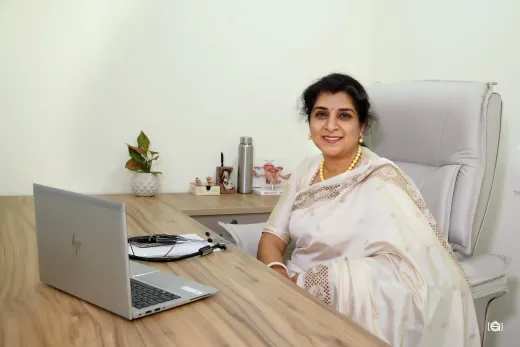
Medically reviewed by Dr. Shweta Agarwal, MBBS, DGO. Last updated: 16 July 2026.
Information on this page is educational and does not replace a medical consultation. Outcomes depend on individual clinical factors.
What is a well-woman health checkup?
A well-woman checkup is a preventive women's health visit built around a detailed conversation, not a shopping list of lab tests. According to the American College of Obstetricians and Gynecologists (ACOG, Committee Opinion No. 755), the foundation is a thorough personal, menstrual, obstetric, sexual, medication, vaccination, and family history — screening and examination are then selected by age and risk.
Depending on your stage of life, the visit may include:
- Blood pressure, weight/BMI, and cardiometabolic risk review — India's national NCD programme (MoHFW) targets adults over 30 for hypertension and diabetes screening.
- Age-appropriate cervical screening (Pap, HPV test, or VIA) — see our cervical screening / Pap and HPV testing page for details.
- Breast awareness and clinical breast examination — India's programme offers clinical breast examination to women over 30 (MoHFW Operational Guidelines for Common NCDs).
- Anaemia (haemoglobin) assessment — the National Health Mission's Anemia Mukt Bharat guidelines (2025–26) support annual haemoglobin testing for women aged 20–49.
- Menstrual health review, contraception or pregnancy planning, and menopause or bone-health review as relevant.
Equally important is what a well-woman visit is not: ACOG guidance is clear that a pelvic examination is not automatically required at every annual visit in a woman with no symptoms. Examinations are done with explanation and consent, when clinically indicated.
What happens during a well-woman visit at Aansh, Chandrapur?
The visit begins with a private conversation with Dr. Shweta Agarwal about your periods, symptoms, past reports, medications, family history, and plans (contraception, pregnancy, or menopause concerns). She then explains which screening tests are due now, which can wait, and why — before any examination or test is done, with your consent (ACOG shared decision-making principle; MoHFW procedure guidance).
A typical flow:
- History and counselling — cycle pattern, pain or heavy bleeding, discharge, breast changes, previous Pap/HPV results, family history of breast or ovarian cancer, lifestyle, mood, and menopausal symptoms.
- Vitals — blood pressure, weight/BMI.
- Clinical breast examination — when indicated and with consent.
- Pelvic examination / cervical screening sample — only when due or indicated. Collecting a Pap/HPV sample requires a gentle speculum examination; brief pressure or discomfort can occur, and you may ask to pause or stop at any time.
- Selected blood tests or referrals — chosen after clinical assessment, not as a default panel. Exact in-house test availability and report turnaround should be confirmed at booking.
Bring your old records. If travel back to the clinic is difficult, carrying previous Pap/HPV reports, mammograms, blood tests, surgery notes, and medication lists means your screening interval is calculated correctly instead of tests being unnecessarily repeated.
Lab package vs a doctor-led well-woman visit: what is the difference?
A lab "female full body checkup" is a blood-draw product; a well-woman visit is a clinical assessment by a gynaecologist that decides which tests you actually need and interprets the results in context. The two are not interchangeable — a 70-parameter blood panel cannot examine a breast lump, collect a Pap sample, or review your menstrual history.
| Lab "full body" package | Doctor-led well-woman visit | |
|---|---|---|
| Who assesses you | No doctor examination; fixed test list | Gynaecologist takes history and examines when indicated |
| Cervical screening (Pap/HPV) | Usually not included — needs a speculum examination by a clinician | Collected when due for your age and history |
| Clinical breast examination | Not possible | Performed when indicated, with consent |
| Test selection | Same panel for everyone | Selected by age, symptoms, prior results, and risk (ACOG; MoHFW) |
| Result interpretation | Report emailed; follow-up left to you | Results explained; abnormal findings get a clear next step |
| Over-testing risk | High — many tests without indication | Lower — tests chosen after clinical assessment |
Both have a place; for preventive gynaecological health, guidelines centre the clinical visit, not the parameter count.
Which tests are due at which age?
There is no universal annual test list. The framework below reflects FOGSI-ICOG (2024), MoHFW NCD guidelines, Anemia Mukt Bharat (2025–26), and USPSTF recommendations — final components always depend on your symptoms, history, prior results, and clinical assessment.
| Age / life stage | Consultation focus | Screening that may be due |
|---|---|---|
| Teens to 19 | Puberty, periods, pain or heavy bleeding, nutrition, wellbeing | HPV vaccination at 9–14 (2 doses, FOGSI 2024); no routine internal exam or cervical screening without indication |
| 20–24 | Menstrual history, BP/weight, contraception or pregnancy plans | Annual haemoglobin (Anemia Mukt Bharat, ages 20–49); HPV vaccine catch-up as appropriate |
| 25–29 | Above, plus first cervical-screening discussion | FOGSI permits starting cervical screening at 25 in good-resource settings — one evidence-based method, not Pap + HPV + VIA together |
| 30–49 | Cervical and breast screening, metabolic risk, menstrual symptoms | Cervical screening by chosen method; breast awareness + clinical breast exam; BP and diabetes screening (MoHFW NCD programme); annual haemoglobin; thyroid/vitamin D only if indicated |
| 50–64 (peri/post-menopause) | Menopause symptoms, heart and bone risk | Continue cervical screening to 65 if due; breast assessment; DXA if fracture risk is increased (USPSTF 2025) |
| 65+ | Falls, fractures, breast or pelvic symptoms, chronic disease | DXA screening; cervical screening may stop only after adequate negative prior screening (FOGSI 2024) |
Cervical screening intervals matter: a negative Pap (cytology) is generally repeated every 3 years; a negative high-risk HPV test every 5–10 years for average-risk women; VIA every 3–5 years (FOGSI-ICOG GCPR 2024). An annual visit does not mean an annual Pap.
Do thyroid, vitamin D, and ultrasound belong in every package?
No. Haemoglobin testing is supported annually for women aged 20–49 under Anemia Mukt Bharat, but thyroid (TSH) and vitamin-D tests should be selected for symptoms or risk factors — the USPSTF finds insufficient evidence to recommend either as a universal screening test for asymptomatic, non-pregnant women. At Aansh, tests are selected after clinical assessment, and Hb/CBC, TSH, glucose/lipids, or vitamin D are possible components, not automatic ones.
A pelvic ultrasound is likewise not a routine component of every well-woman checkup — it is used for organ assessment when clinically indicated. Sex determination is illegal under the PCPNDT Act and is not performed here.
Breast health and bone health at midlife
Breast awareness means knowing your usual breast look and feel, and reporting a new lump, nipple inversion or bloody discharge, skin dimpling, or a persistent one-sided change promptly (MoHFW; WHO Global Breast Cancer Initiative). Clinical breast examination is offered to women over 30 under India's programme; mammography is not an automatic annual item for every woman over 40 — the right age and interval depend on individual risk and programme context (WHO position paper on mammography screening).
For bone health, DXA (bone-density) screening is recommended for women 65 and older; younger postmenopausal women should first have fracture-risk assessment, with DXA when risk is increased — for example low body weight, prior fracture, early menopause, or long-term steroid use (USPSTF 2025). Menopause itself is recognised after 12 months without a period; routine hormone tests are usually not needed just to confirm it in a typical presentation.
When not to wait for a checkup
A preventive visit is for when you feel well. Some symptoms need prompt evaluation instead of waiting for an annual package (MoHFW warning-signs guidance):
- Bleeding after menopause or after sex
- A new breast lump or nipple discharge
- Persistent abnormal vaginal discharge — see white discharge or vaginal infection
- Very heavy bleeding or severe pelvic pain — see irregular, painful or heavy periods
If a checkup raises the possibility of PCOS/PCOD, ovarian cysts, uterine fibroids, or menopause-related changes, Dr. Shweta will explain the evaluation and management plan — this page's checkup is the starting point, and our routine gynaecology care in Chandrapur and women's health services pages cover ongoing care.
References
- FOGSI-ICOG Good Clinical Practice Recommendation: Prevention and Management of Cervical Cancer (2024)
- MoHFW: Operational Guidelines on Prevention, Screening and Control of Common Non-Communicable Diseases
- MoHFW/Ayushman Arogya Mandir: Medical Officer Training Module for NCD Screening
- National Health Mission: Anemia Mukt Bharat Abhiyaan Guidelines 2025–26
- ACOG Committee Opinion No. 755: Well-Woman Visit (2018)
- USPSTF: Osteoporosis to Prevent Fractures — Screening (2025)
- USPSTF: Thyroid Dysfunction — Screening
- USPSTF: Vitamin D Deficiency in Adults — Screening (2021)
- WHO: Global Breast Cancer Initiative Implementation Framework